Hurricane Season Roof Prep: Protect Your Home Before June
import { CTA } from "@/components/blog/cta"; import { InternalLink } from "@/components/blog/internal-link"; import { FAQSection } from "@/components/blog/faq-section";
June 1 is less than two months away.
If you live in Spring Hill, Hudson, New Port Richey, Holiday, Port Richey, Elfers, or Clearwater Beach, you know what that date means: hurricane season begins, and the next six months will test your roof in ways no other weather event can.
Here's the hard truth we've learned from repairing storm-damaged roofs across Pasco and Pinellas counties: the roofs that survive hurricanes aren't necessarily the newest ones. They're the ones that were properly prepared before the storm arrived.
A roof with three loose shingles in good condition will lose those shingles in 70 mph winds. Once those shingles are gone, the underlayment is exposed, water enters the deck, and a manageable situation becomes an emergency. The same roof with those three shingles properly secured? It rides out the storm without a scratch.
This article is about pre-season preparation — the steps you take in April and May to verify your roof's wind resistance and close every vulnerability before the first named storm forms. It's not about what to do after a hurricane hits. By then, it's too late.
Why Pre-Season Prep Matters More Than You Think
Florida's Gulf Coast has been through enough hurricane seasons that most residents have a drill for the house: shutters, supplies, evacuation routes. But very few people think about their roof until they see a neighbor's shingles scattered across the street.
The problem is that wind damage is cumulative and progressive. A roof doesn't go from "fine" to "destroyed" in one moment. It starts with one shingle lifting. Then the next course lifts because the seal above it is gone. Then a section of underlayment peels back. Then water enters the structure.
Each stage makes the next stage exponentially more likely. The goal of pre-season prep is to make sure Stage One never happens.
Research from the Insurance Institute for Business & Home Safety (IBHS) shows that homes with verified wind-resistant roofing features suffer 60% fewer insurance claims during named storm events compared to homes without those features. Sixty percent. That's the difference between a storm you barely notice and a storm that defines your year.
The Wind Resistance Verification Audit
Before hurricane season, your roof needs a wind resistance verification — a systematic check of every component that wind will try to peel, lift, or tear away. Here's what that audit looks like:
Shingle or Tile Attachment Verification
For asphalt shingle roofs: The critical factor is seal strip adhesion. Modern architectural shingles have a thermally-activated adhesive strip that bonds each shingle to the one below it once the sun heats it. In Florida, these strips sometimes fail to activate properly if shingles were installed during cooler months or if manufacturing adhesive quality was inconsistent.
A proper wind prep includes a hands-on seal check: a roofing professional lifts the corner of sample shingles across the roof to verify they're bonded. If they lift easily, they need to be hand-sealed with roofing adhesive — typically six spots per shingle.
Additionally, nail pattern and placement matter. Shingles should have a minimum of four nails per shingle (six in high-wind zones per Florida Building Code). Nails placed too high, too low, or not driven flush all reduce wind resistance significantly.
For tile roofs: The concern is tile attachment method. Mechanically fastened tiles (screwed or clipped) provide far superior wind resistance compared to mortar-set tiles, which can loosen and become projectiles. A pre-season tile roof check includes verifying that tiles are secure, especially along edges, ridges, and hips where wind uplift forces are highest.
Ridge and Hip Integrity
Roof ridges and hips experience the highest wind uplift forces on any roof. Ridge caps — the final layer of shingles or tiles along the peak — are the first components to fail in high winds if not properly installed.
Check that: Ridge cap shingles are fully adhered, with no loose edges or visible gaps Ridge vents (if present) are securely fastened and show no signs of lifting or separation Hip ridge tiles are mechanically attached, not just mortared Any exposed fasteners on ridge components are sealed
Edge and Perimeter Security
Wind doesn't attack the middle of your roof first. It attacks the edges.
The perimeter of your roof — eaves, rakes, and corners — experiences wind pressures 2–3 times higher than the roof field. Pre-season edge verification includes:
Drip edge attachment: Verify drip edge metal is securely fastened along all edges with no loose sections Rake edge condition: The sloped edges of gable roofs are especially vulnerable. Check for lifted shingles or tiles along these edges Corner reinforcement: Roof corners experience the highest localized wind pressures. Any loose material at corners needs immediate attention
Penetration and Flashing Wind Resistance
We covered flashing failures in detail in our dedicated flashing guide, but from a wind perspective, the concern is slightly different. Wind-driven rain is the enemy here — rain that moves horizontally at 60+ mph and penetrates any gap that wouldn't leak during normal vertical rainfall.
Pre-season flashing wind prep includes: Verifying pipe boot collars are tightly sealed around pipes (wind can force water through gaps as small as 1/16 inch) Checking that chimney counter flashing is seated properly and mortar joints are intact Ensuring step flashing along sidewalls has no lifted sections Confirming skylight seals are intact and gaskets are pliable
The Attic Pressurization Factor
Here's a hurricane preparedness factor most people don't think about: your attic ventilation openings.
When hurricane-force winds hit your home, they don't just push against the outside of the roof. They pressurize the attic space through soffit vents, gable vents, and ridge vents. If the attic becomes pressurized while the exterior roof surface experiences negative pressure (lift), the combined force can literally blow the roof off from the inside out.
This isn't theoretical. IBHS research after Hurricane Andrew showed that attic pressurization was a significant contributor to catastrophic roof failures in homes that otherwise had adequate roof attachment.
Pre-season attic pressurization prep:
Soffit vents: Ensure they're clear but understand they're designed to allow air entry. You can't and shouldn't seal them. Gable vents: In hurricane zones, some professionals recommend installing impact-rated gable vent covers or having a plan to seal gable vents before evacuation. Garage doors: This is critical. An open or failed garage door during a hurricane pressurizes the entire home interior, dramatically increasing roof failure risk. Ensure your garage door is rated for wind load or have a bracing kit ready. Interior doors: Keep interior doors closed during a storm. This compartmentalizes pressure and reduces the load on any single building component.
Tree and Debris Risk Mitigation
Wind doesn't just threaten your roof directly. It turns the environment around your home into projectiles.
Pre-season tree assessment: Any dead or dying tree within falling distance of your home should be professionally removed before June Overhanging branches should be trimmed to a minimum of 10 feet from the roof surface Palm trees near the house should have dead fronds removed — a dead palm frond in 90 mph winds is a sharp, heavy missile Pay special attention to trees that showed storm damage last season. A partially split trunk or major limb is exponentially more likely to fail in the next storm
Loose object inventory: Walk your property and identify anything wind could pick up: outdoor furniture, garden decorations, loose pavers, children's play equipment, yard tools. Before a storm, these all need to be secured or moved inside. A plastic lawn chair in 80 mph winds can shatter a window.
Documentation and Insurance Preparation
Pre-season isn't just about physical preparation. It's about administrative preparation that protects you financially if the worst happens.
Photographic documentation: Take dated, high-resolution photos of your roof from multiple angles — all four sides plus any accessible aerial shots. Store these in cloud storage (not just on your phone). If you need to file an insurance claim, having pre-storm documentation of your roof's condition is invaluable.
Insurance policy review: Read your homeowners insurance policy's windstorm and hurricane coverage section. Know your deductible (in Florida, hurricane deductibles are typically 2–5% of dwelling coverage, not a flat dollar amount). Know what's covered and what requires separate windstorm coverage.
Contractor relationships: After a major storm, reputable roofing contractors are booked weeks or months in advance. Establish a relationship with a licensed roofing contractor before you need one. At Shield Roof Pro, we prioritize existing customers and inspection program participants when storm response demand peaks.
The Pre-Season Preparation Timeline
Here's a recommended timeline for hurricane roof preparation:
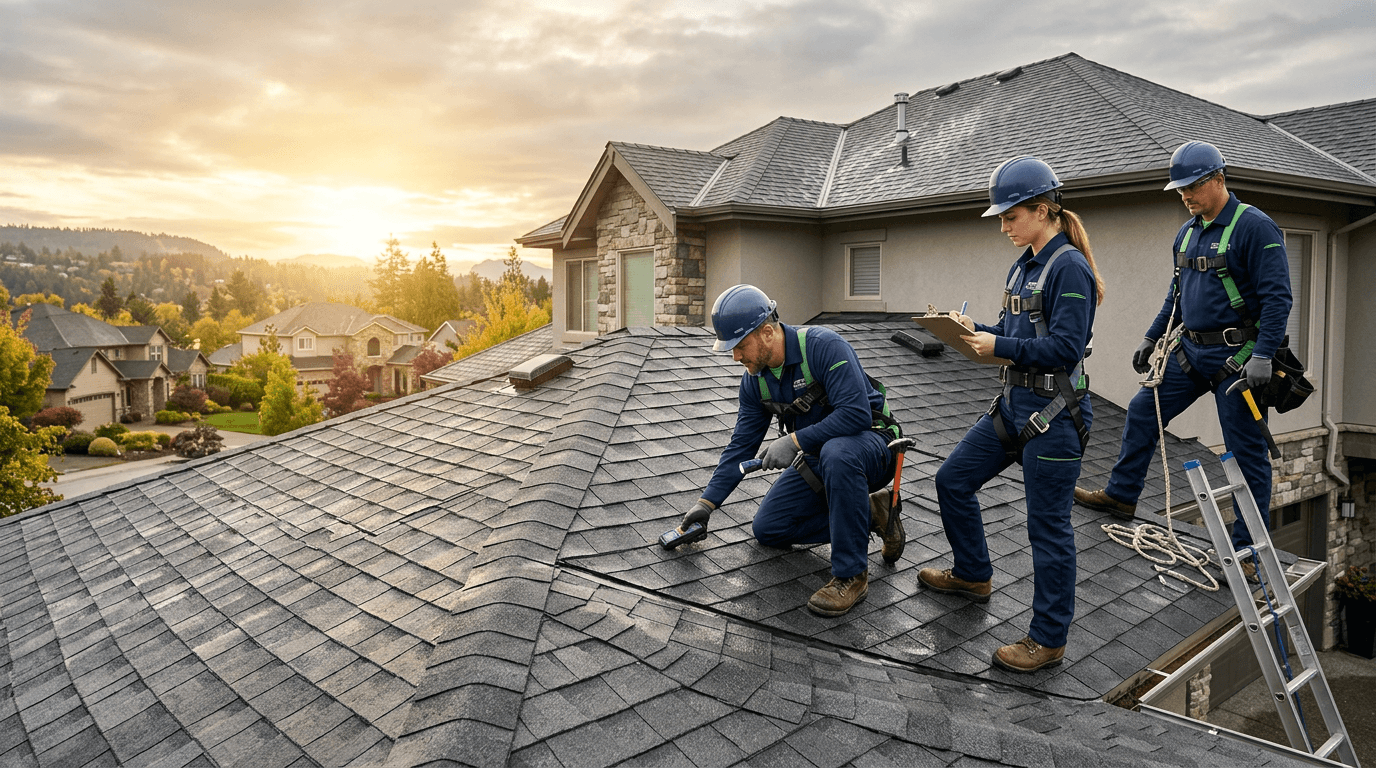
April: Professional Inspection
Schedule a professional roof inspection and wind resistance assessment. This is the best time because: Roofing contractors have more availability before storm season peaks If issues are found, there's time to complete repairs before June Weather is typically dry and mild, ideal for thorough inspection
Request specifically: shingle seal verification, nail pattern assessment, flashing wind-readiness check, ridge and edge security evaluation, and attic ventilation assessment.
May: Complete Any Identified Repairs
If your April inspection revealed issues — loose shingles, compromised flashing, degraded ridge caps — schedule and complete all repairs in May. Don't carry known vulnerabilities into June.
If a full roof replacement is recommended and your roof is near end-of-life, weigh the cost of emergency storm damage (with a deductible that could be $8,000–$15,000) against a planned replacement. Sometimes the math is compelling.
Late May: Tree Trimming and Debris Clearance
Schedule final tree trimming. Remove any dead branches, overhanging limbs, and palm fronds. Clear gutters and roof surface debris. Secure or store loose outdoor objects.
When a Storm Is Forecast (72-Hour Window)
When a named storm is forecast to potentially impact the Tampa Bay area within 72 hours:
Complete final visual roof check from the ground — look for any loose shingles or tiles you can spot Secure all loose outdoor objects Close and brace garage doors if they're not impact-rated Place important documents and your roof documentation in a waterproof container Know your evacuation route and plan
Hurricane-Resistant Roofing Upgrades
If you're considering roof improvements and want to invest in maximum storm resilience, these upgrades provide the highest wind resistance return:
Impact-resistant shingles: Rated UL 2218 Class 4 or Miami-Dade County approved, these shingles are tested to withstand higher wind speeds and resist hail/debris impact. They typically qualify for insurance premium discounts in Florida.
Enhanced nail patterns: Six nails per shingle (vs. the standard four) in a specific pattern increases wind resistance by 20–30%. Florida Building Code requires this in high-velocity hurricane zones.
Seal-all application: Hand-sealing every shingle with roofing adhesive at six points per shingle, not just relying on the factory adhesive strip. This is labor-intensive but dramatically improves wind resistance on existing shingle roofs.
Continuous ridge ventilation with baffled design: Modern ridge vent systems with internal baffles reduce wind-driven rain penetration while maintaining ventilation.
Tile mechanical attachment: If you have or are installing a tile roof, specify mechanical attachment (clips or screws) over mortar-set. The wind resistance difference is substantial.
Your insurance company may offer premium discounts for these upgrades. Ask your agent about Florida's wind mitigation inspection form (OIR-B1-1802) — a completed form with qualifying features can reduce your annual premium by hundreds or thousands of dollars.
Don't Wait for the Warning Sirens
The single biggest mistake we see homeowners make is waiting until a named storm is in the Gulf before thinking about their roof. By then, contractors are swamped, materials are scarce, and the preparation window has closed.
April and May are your months. The weather is cooperative, contractors are available, and you have the time to do the job right. A few hours of pre-season preparation can mean the difference between a roof that shrugs off a Category 1 storm and one that leaves you filing an insurance claim and living in a hotel for three weeks.
At Shield Roof Pro, we offer pre-season wind resistance inspections across Spring Hill, Hudson, New Port Richey, Holiday, Port Richey, Elfers, and Clearwater Beach. We'll tell you exactly what your roof can handle and exactly what it needs before June 1.
Because when the storm comes, it won't care how busy you are. It'll test your roof exactly as it is — not as you meant to fix it.
<CTA phone="727-555-ROOF" text="Schedule your pre-season wind resistance inspection before the rush. Call Shield Roof Pro today." servicesArea="Serving Spring Hill, Hudson, New Port Richey, Holiday, Port Richey, Elfers, and Clearwater Beach, Florida" />
Related reading: Florida Roof Maintenance Checklist: Prevent Leaks Before They Start Roof Flashing Repair: The Number 1 Cause of Leaks Most Roofers Miss Why an Annual Roof Inspection Saves Thousands in Leak Repairs
<FAQSection questions={[ { question: "When is the best time to prepare my roof for hurricane season?", answer: "The ideal time is April and May, before the June 1 start of hurricane season. Scheduling a professional inspection in April gives you time to complete any needed repairs before storms arrive. Contractors have more availability during this window, and you avoid the pre-storm rush when demand spikes and scheduling becomes difficult." }, { question: "How much wind can a typical Florida roof withstand?", answer: "Standard architectural asphalt shingles in Florida are typically rated for 110–130 mph winds when properly installed with adequate nail patterns and sealed adhesive strips. Tile roofs with mechanical attachment can withstand 140–170 mph. However, actual performance depends heavily on installation quality, material condition, and whether seal strips have properly bonded. A roof with loose or unsealed shingles may fail at 70–80 mph." }, { question: "Can I get an insurance discount for a wind-resistant roof?", answer: "Yes. Florida insurance companies offer wind mitigation discounts for roofs with specific features documented on the OIR-B1-1802 form. Qualifying features include impact-resistant shingles (Miami-Dade approved), enhanced nail patterns (6 nails per shingle), secondary water resistance (peel-and-stick underlayment), and proper hip/ridge construction. Discounts can reduce your annual premium by 10–45%, saving hundreds or thousands per year." }, { question: "Should I stay and protect my home during a hurricane?", answer: "Always follow evacuation orders from local emergency management. No roof preparation makes a home safe to occupy during a mandatory evacuation. Pre-season preparation protects your property investment, but personal safety comes first. Ensure your roof is prepared, your documentation is ready, your insurance is current, and then follow official guidance on evacuation." }, { question: "What should I do immediately after a hurricane passes?", answer: "After it's safe to go outside, perform a ground-level visual inspection of your roof from all four sides. Document any visible damage with photos before making temporary repairs. Cover exposed areas with tarps if safe to do so. Contact your insurance company to initiate the claim process and your roofing contractor for a professional assessment. Do not climb onto a storm-damaged roof — structural integrity may be compromised." } ]} />
Need professional roofing help?
Residential Roofing Contractors Pros serves the Tampa Bay area with 18+ years of experience. Request a free estimate through our contact form.
Request Free Estimate