Does Homeowners Insurance Cover Roof Leak Repair in Florida
import CTA from '@/components/blog/CTA'; import FAQ from '@/components/blog/FAQ'; import InternalLink from '@/components/blog/InternalLink';
Most Florida homeowners policies cover roof leaks caused by sudden, accidental events like storms or fallen trees Wear-and-tear damage and lack of maintenance are typically excluded from coverage Document everything immediately — photos, receipts, and temporary repair costs strengthen your claim Shield Roof Pro provides free inspections and works directly with your insurance adjuster Call 727-555-ROOF for a no-cost inspection before filing your claim
If you've discovered a roof leak in your Florida home, one of the first questions on your mind is probably: Will my insurance pay for this?
The answer depends on several factors — the cause of the leak, your specific policy language, and how well you document the damage. In this guide, we'll break down exactly what Florida homeowners insurance covers when it comes to roof leaks, what it doesn't cover, and the steps you need to take to maximize your chances of a successful claim.
What Causes Determine Insurance Coverage for Roof Leaks
Insurance companies don't look at roof leaks as a single category. They look at the cause of the leak. This distinction is everything.
Covered Perils — When Insurance Typically Pays
Most standard HO-3 homeowners policies in Florida cover roof damage caused by what insurers call "sudden and accidental" events. These are also known as covered perils:
Windstorm and hail damage — Florida's storm season brings hurricanes and tropical storms that can lift shingles, tear off flashing, and create immediate leak pathways Fallen trees or branches — When a tree crashes through your roof during a storm, the resulting damage and leak are covered Lightning strikes — Lightning can crack tiles, melt flashing, and create entry points for water Weight of ice or snow — Rare in Florida, but technically a covered peril in most policies Vandalism — If someone intentionally damages your roof and water gets in, your policy responds Aircraft or vehicle impact — Uncommon but covered under standard policies
The key phrase here is sudden. If the damage happened quickly from a specific event, your insurer is far more likely to cover it.
Excluded Causes — When Insurance Says No
Just as important, you need to know what your policy typically does not cover:
Normal wear and tear — Roofs age. Shingles curl. Flashing corrodes. This gradual deterioration is not a covered peril Lack of maintenance — If you ignored missing shingles for two years and water finally damaged your ceiling, the insurer will point to negligence Gradual water damage — A slow leak that develops over months (not from a single event) is almost always excluded Earthquake or flood — Standard homeowners policies exclude these. You need separate flood insurance through the NFIP Manufacturing defects — If the roofing material itself was faulty, that's a warranty issue with the manufacturer, not an insurance claim
<InternalLink href="/blog/diy-vs-professional-repair" title="Not sure whether your leak needs professional assessment? Read our DIY vs. Professional guide." />
Florida-Specific Insurance Challenges You Need to Know
Florida's insurance market is unlike any other state's. Understanding the local landscape helps you set realistic expectations.
The Windstorm Deductible Trap
Most Florida policies have a separate windstorm deductible — typically 2% to 5% of your dwelling coverage amount. On a home insured for $350,000, that's a $7,000 to $17,500 deductible just for wind damage. If your roof repair costs $5,000 and your windstorm deductible is $10,000, filing a claim doesn't make financial sense.
Always check your declarations page before filing. The windstorm deductible is listed separately from your standard deductible.
Citizens Property Insurance Considerations
If you're insured through Citizens Property Insurance Corporation — Florida's insurer of last resort — the claims process works similarly, but coverage terms may differ slightly. Citizens follows standard HO-3 forms, so the covered peril vs. excluded cause framework still applies.
The Assignment of Benefits (AOB) Reform
Florida reformed its AOB laws in 2019 and again in 2022. Previously, roofing contractors could sign AOB agreements with homeowners and file claims directly — a practice that led to widespread fraud and soaring premiums. Today, you retain more control, but it also means you need to be more involved in the claims process. Shield Roof Pro never asks you to sign over your benefits. We inspect, document, and advise — you decide whether to file.
Step-by-Step: How to File a Roof Leak Insurance Claim in Florida
Doing this in the right order matters. Here's the process we recommend to homeowners who call us after discovering a leak.
Step 1: Mitigate Further Damage Immediately
Your policy requires you to take reasonable steps to prevent additional damage. That means:
Place buckets under active drips Move furniture and belongings out of the way Apply a tarp if it's safe to do so Keep all receipts for emergency supplies
These temporary repair costs are typically reimbursable as part of your claim.
Step 2: Document Everything with Photos and Video
Before anything gets cleaned up or repaired, photograph and video the damage:
Interior water stains on ceilings and walls Dripping water in progress Damaged or missing shingles visible from the ground Fallen branches or debris on the roof Any personal property damaged by the leak
Date-stamp your photos. Most smartphones do this automatically.
Step 3: Call Shield Roof Pro for a Free Inspection
<InternalLink href="/blog/free-inspection-estimate" title="Learn exactly what happens during your free inspection." />
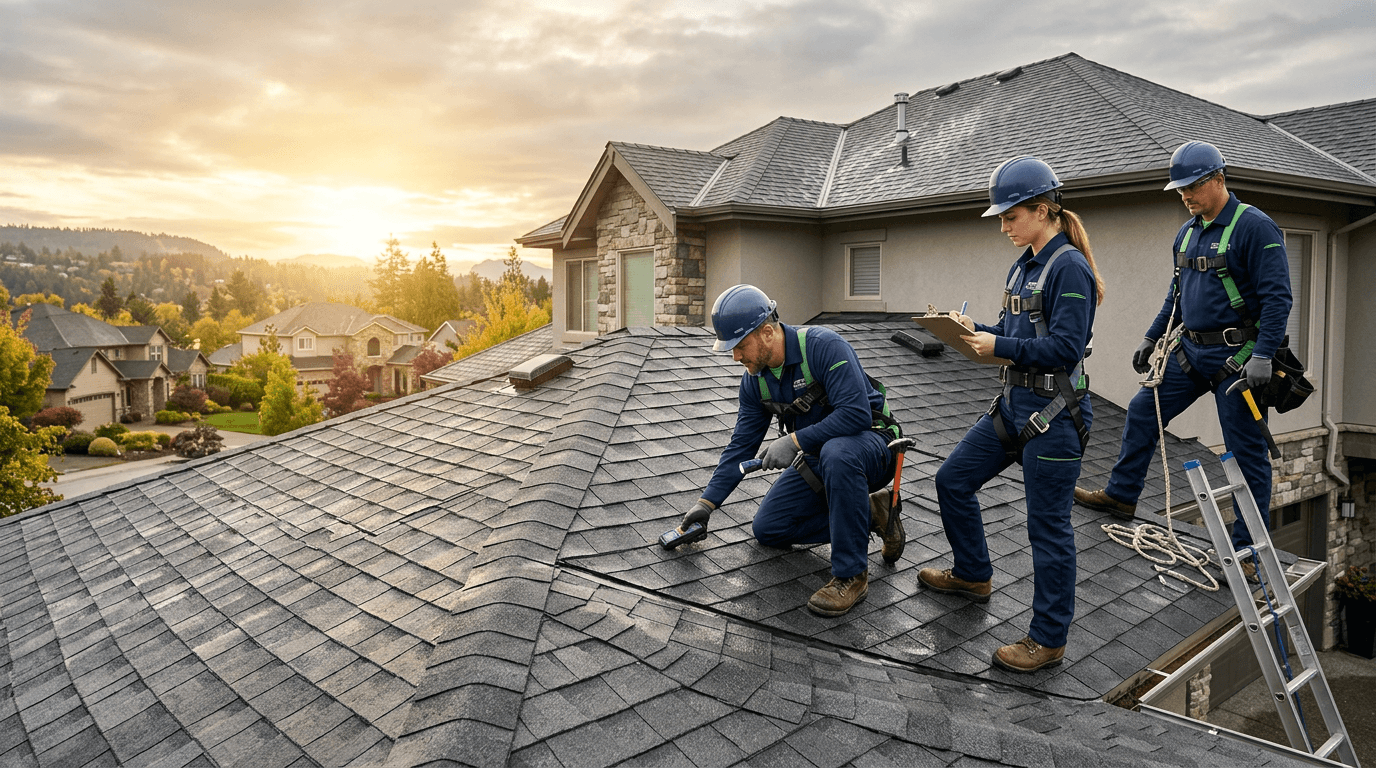
Our certified inspectors will assess the cause of the leak, document the extent of damage, and provide a detailed report. This report becomes critical evidence when you file your claim. We've been working with insurance adjusters across Pasco and Hernando counties for years, and we know exactly what documentation they require.
Step 4: Review Your Policy Before Filing
Pull out your declarations page. Look for:
Your standard deductible Your windstorm or hurricane deductible (if separate) Your dwelling coverage limit Any endorsements for water backup or code upgrade coverage
If your repair estimate is close to or below your deductible, filing a claim may not be worthwhile — and could increase your premiums at renewal.
Step 5: File the Claim with Your Insurance Company
Call your insurer or agent and report the claim. They'll assign an adjuster who will schedule an inspection. Our inspection report will already be in your hands, so you can compare notes with the adjuster's findings.
Step 6: The Adjuster's Inspection
The insurance adjuster will assess the damage independently. Having Shield Roof Pro present during the adjuster's visit can be invaluable. We've seen cases where adjusters missed damage that our team identified — and catching those details made the difference between a partial payout and full coverage.
Step 7: Receive Your Settlement and Begin Repairs
Once the claim is approved, you'll receive a settlement offer. If the amount seems too low, you have the right to negotiate. Our detailed estimate gives you leverage in those conversations.
Common Reasons Florida Roof Leak Claims Get Denied
Understanding why claims are denied helps you avoid these pitfalls.
Denial Reason 1: Lack of Maintenance Evidence
If your roof hasn't been inspected or maintained in years, the insurer will argue the leak resulted from neglect, not a covered peril. Regular inspections — at least every two years — create a paper trail showing you've been a responsible homeowner.
Denial Reason 2: Pre-Existing Damage
If the adjuster determines the leak predates the event you're claiming (for example, the leak started six months ago but you're blaming last week's storm), the claim will be denied. This is why timing matters — report leaks as soon as you notice them.
Denial Reason 3: Roof Age Exceeds Policy Limits
Some Florida policies include a roof age limitation. If your roof is over 15 or 20 years old (depending on the carrier), the insurer may only offer Actual Cash Value (depreciated value) instead of Replacement Cost Value. That can dramatically reduce your payout.
Denial Reason 4: Incomplete Documentation
Claims without photos, receipts, or professional assessment are far more likely to be denied or underpaid. Don't file a claim with nothing but a phone call and a description.
What Shield Roof Pro Does Differently with Insurance Claims
We don't just repair roofs. We advocate for you throughout the claims process.
Our insurance claim support includes:
Free, comprehensive roof inspection with detailed photo documentation Written cause-of-damage assessment that adjusters respect On-site presence during the adjuster's inspection (with your permission) Supplemental damage reports if the adjuster's initial estimate is incomplete Direct communication with your adjuster (you remain the policyholder) Transparent repair estimates that align with insurance industry pricing databases
We've helped hundreds of homeowners across Spring Hill, Hudson, New Port Richey, Holiday, Port Richey, and Elfers navigate the claims process successfully. Our reputation for thorough, honest assessments means adjusters take our reports seriously.
<InternalLink href="/blog/financing-roof-repair-florida" title="What if your claim is denied or you don't have coverage? Explore our financing options guide." />
When You Shouldn't File an Insurance Claim
Filing a claim isn't always the right move. Consider these scenarios:
The repair cost is below or near your deductible. You'd pay most or all of it out of pocket anyway, and a claim on your record could raise future premiums. You've filed multiple claims recently. Two or more claims in three years can make you a high-risk policyholder. Some carriers non-renew after that. The damage is clearly wear and tear. Filing a claim you know will be denied wastes everyone's time and creates a claim record that follows you.
In these cases, paying out of pocket or exploring financing options is often the smarter financial decision.
Protecting Your Roof — And Your Insurance Standing — Going Forward
After a leak is repaired, take steps to prevent the next one and strengthen your insurance position:
Schedule professional roof inspections every two years Keep gutters clean and drainage paths clear Trim overhanging tree branches Address minor shingle damage before it becomes a leak Keep a home maintenance log with dates, photos, and receipts
Some insurers offer premium discounts for documented maintenance programs and impact-resistant roofing materials. Ask your agent about available credits after your repair is complete.
Brand POV: Our Stance on Insurance Claims at Shield Roof Pro
At Shield Roof Pro, we believe every homeowner deserves an honest assessment — not a sales pitch disguised as an inspection. We've seen too many contractors encourage homeowners to file claims that don't make financial sense, or to sign agreements that compromise their position with their insurer.
Our approach is different. We inspect. We document. We tell you the truth about what your insurance will likely cover and what it won't. If filing a claim is the right move, we support you through every step. If it's not, we give you a clear, upfront repair estimate and explore financing options that work for your budget.
We serve Spring Hill, Hudson, New Port Richey, Holiday, Port Richey, Elfers, and Clearwater Beach with the same integrity we'd bring to our own homes. That's the Shield Roof Pro standard.
<CTA phone="727-555-ROOF" text="Ready to find out if your roof leak is covered? Call Shield Roof Pro at 727-555-ROOF for a free, no-obligation inspection. We'll tell you exactly where you stand." />
Frequently Asked Questions
Does homeowners insurance cover roof leaks in Florida?
It depends on the cause. Most policies cover leaks from sudden events like windstorms, hail, or fallen trees. Leaks from wear and tear, aging, or lack of maintenance are typically excluded. The only way to know for sure is to have a professional inspect the damage and review your specific policy.
How much is the deductible for roof damage in Florida?
Florida policies typically have a separate windstorm or hurricane deductible ranging from 2% to 5% of your dwelling coverage. On a $300,000 home, that's $6,000 to $15,000. Your standard deductible (often $500 to $2,500) applies to non-wind perils. Check your declarations page for exact amounts.
Can I file an insurance claim if my roof is old?
You can file, but older roofs may only qualify for Actual Cash Value (depreciated payout) instead of Replacement Cost Value. Some insurers won't cover roofs over 15 or 20 years old at all. A professional inspection will help you understand what to expect before you file.
Should I repair the leak myself before the adjuster sees it?
Make only temporary emergency repairs — tarps, buckets — to prevent further damage. Keep all receipts. Do not start permanent repairs before the adjuster inspects the damage, as this can jeopardize your claim. Shield Roof Pro can perform emergency tarping and document everything for your claim.
What if my insurance claim for roof damage is denied?
You have the right to appeal. Gather additional documentation, get a second professional opinion, and consider hiring a licensed public adjuster. Shield Roof Pro can provide supplemental damage reports that strengthen your appeal. We also offer financing options if the denial stands.
export const faqData = [ { question: "Does homeowners insurance cover roof leaks in Florida?", answer: "It depends on the cause. Most policies cover leaks from sudden events like windstorms, hail, or fallen trees. Leaks from wear and tear, aging, or lack of maintenance are typically excluded. The only way to know for sure is to have a professional inspect the damage and review your specific policy." }, { question: "How much is the deductible for roof damage in Florida?", answer: "Florida policies typically have a separate windstorm or hurricane deductible ranging from 2% to 5% of your dwelling coverage. On a $300,000 home, that's $6,000 to $15,000. Your standard deductible (often $500 to $2,500) applies to non-wind perils. Check your declarations page for exact amounts." }, { question: "Can I file an insurance claim if my roof is old?", answer: "You can file, but older roofs may only qualify for Actual Cash Value (depreciated payout) instead of Replacement Cost Value. Some insurers won't cover roofs over 15 or 20 years old at all. A professional inspection will help you understand what to expect before you file." }, { question: "Should I repair the leak myself before the adjuster sees it?", answer: "Make only temporary emergency repairs — tarps, buckets — to prevent further damage. Keep all receipts. Do not start permanent repairs before the adjuster inspects the damage, as this can jeopardize your claim. Shield Roof Pro can perform emergency tarping and document everything for your claim." }, { question: "What if my insurance claim for roof damage is denied?", answer: "You have the right to appeal. Gather additional documentation, get a second professional opinion, and consider hiring a licensed public adjuster. Shield Roof Pro can provide supplemental damage reports that strengthen your appeal. We also offer financing options if the denial stands." } ];
Need professional roofing help?
Residential Roofing Contractors Pros serves the Tampa Bay area with 18+ years of experience. Request a free estimate through our contact form.
Request Free Estimate